
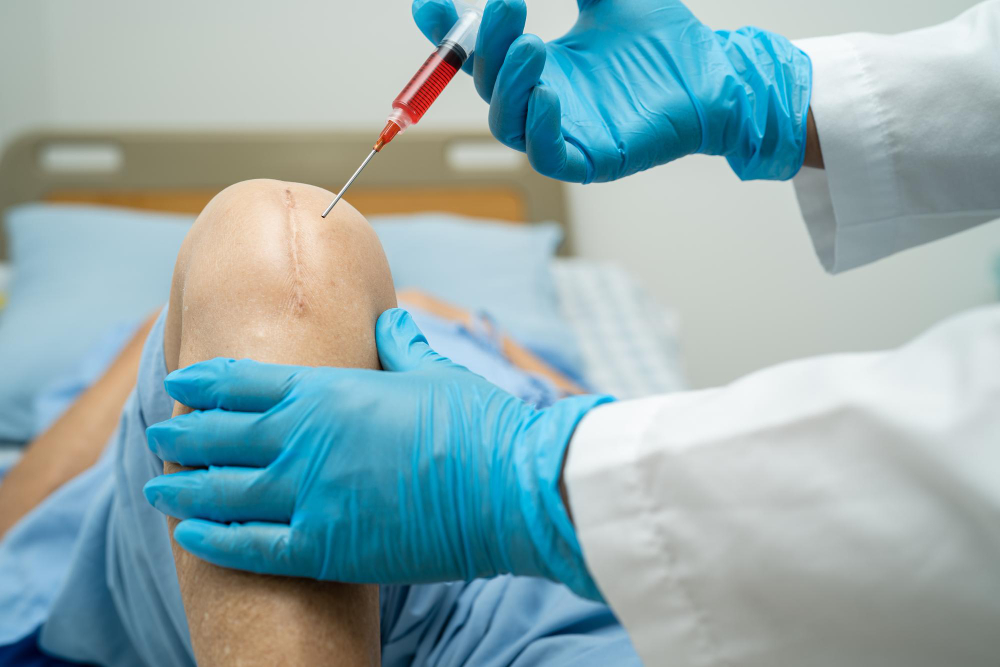
Young or old, you’ve probably felt a nagging pain in your knee at some point. In fact, some studies suggest that knee pain has increased up to 65% in the over the past few decades. But for some that pain becomes constant and unbearable. That can be for a number of reasons including:
- Osteoarthritis (often referred to as degenerative or “wear and tear” arthritis
- Damage to the meniscus or cartilage (this can also be caused by osteoarthritis)
- Gout
- Tendonitis
- Bursitis
- Torn ligament or tendon
For many of these conditions, there are clear treatment plans that pave a way to recovery. However, cartilage damage (the regions of cartilage in the knee are known as menisci) has previously been tricky to treat. But now revolutionary technologies and surgeries could provide hope to those suffering in silence.
What do the menisci do?
The menisci sit on the bones of your knee and act as cushions. They absorb shocks and make sure the bones of your knee don’t bump and rub against each other. However, unlike most tissues they don’t have a blood supply and as such can’t get the nutrients they need to repair themselves. Damage often occurs in young people with sports injuries. You may hear doctors talk of the “unhappy triad” where athletes tear their ACL, MCL and damage their medial meniscus. This is what happened to Judy Hobson who talked to the DailyMail about her road to recovery
“I had to give up sport altogether. I could barely walk a couple of hundred yards and was starting to limp. I was miserable because it was such a huge part of my life. I even thought about having my leg amputated and being fitted with an artificial limb”
A 3D printing breakthrough
New hope could be on the horizon as researchers at the University of Alberta are working on 3D printing knee cartilage needed for transplant surgery. They have been able to print a 3D leaf made of natural proteins. One of the engineers, Stella Matthews, said
“It is the first step towards tissue engineering,”
Next, they will try to print cartilage shaped for the individual that surgeons can transplant into the patient’s knee.
What can be done at the moment?
Whilst these results are highly exciting, they aren’t available for the patient right now. However, patients can still have a meniscus replacement surgery. This is what Judy Hobson had done. Again talking to the Daily Mail she said
“After nine months, I could walk more than a mile pain-free – now it’s five or six miles and I’ve also started to play a little volleyball again. I’m so grateful to the person who donated the meniscus.”
Specialist clinics across the United States offer the procedure. Ricky Valadez, who had the procedure and talked to Fox32 about it said
“The best thing, in the long run, is I’m going to be able to have the opportunity to do whatever I want and not be held back,”.