
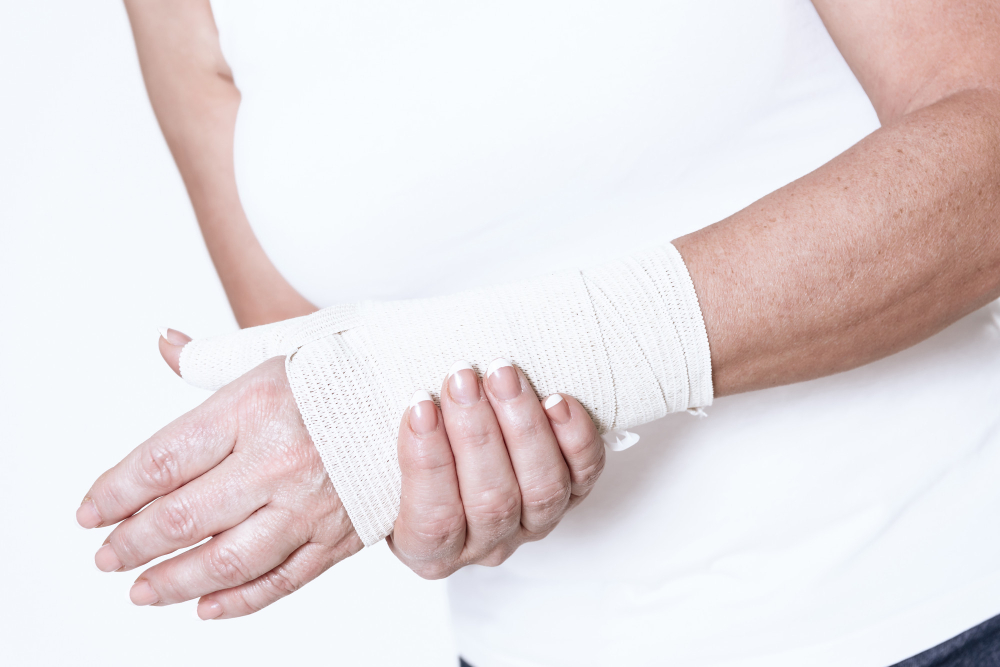
Fracture stabilization is the use of a variety of processes to enhance the healing of bone fractures. There are several methods including surgical, non-surgical, minimally invasive (vertebroplasty, fusion, kyphoplasty). Fracture stabilization gives pain relief and prevents further damage to soft tissue and bone.
There are closed and open fractures. With open fracture surrounding tissues and bone are visible. Fractures may include one or more bones and can be a clean break or shattered into numerous pieces. Breaks are a traumatic injury to the bone, tissues, and individual.
There are five classifications of fractures. These include:
- Greenstick – found in children, incomplete fracture where the bone is bent
- Transverse
- Oblique – pattern of curves and slopes
- Comminuted – bone breaks into pieces
- Impacted/Buckle Fracture – bone ends are driven into each other
In addition, a pathological fracture is due to bone weakness, stress, and hairline fracture.
The doctor will diagnose the type of fracture by physical exam, x-ray, and MRI.
With a stable fracture, minimal treatment is required. In a stable fracture, the bone just breaks in one place and is easier to fix.
An unstable fracture can result from a car accident, falls, and other high impact situations. They may be accompanied by other serious injuries as well. Surgery is always required to fix the fracture. Symptoms of an unstable fracture include:
- excruciating pain
- bone showing through the skin
- swelling and numbness
Early stabilization leads to better outcomes, such as fewer complications, shorter hospitalization, and lower cost. However, it may be contraindicated if there are head injuries, internal injuries, and other risk factors.
There are a number of options including the following:
- External fixation -Pins and rods are placed outside the extremity
- Internal fixation – Fracture is aligned and plates and pins are placed to hold the pieces together
- Ring fixator or Taylor Spatial Frame – used if there is a deformity to be corrected
An unstable fracture is a severe injury. It is normally treated with the bone reduction and the bone may still slip out of place. This makes it difficult for the bone to be realigned. The bone is shattered into fragments, and it may not be possible to put all the broken pieces back in place.