
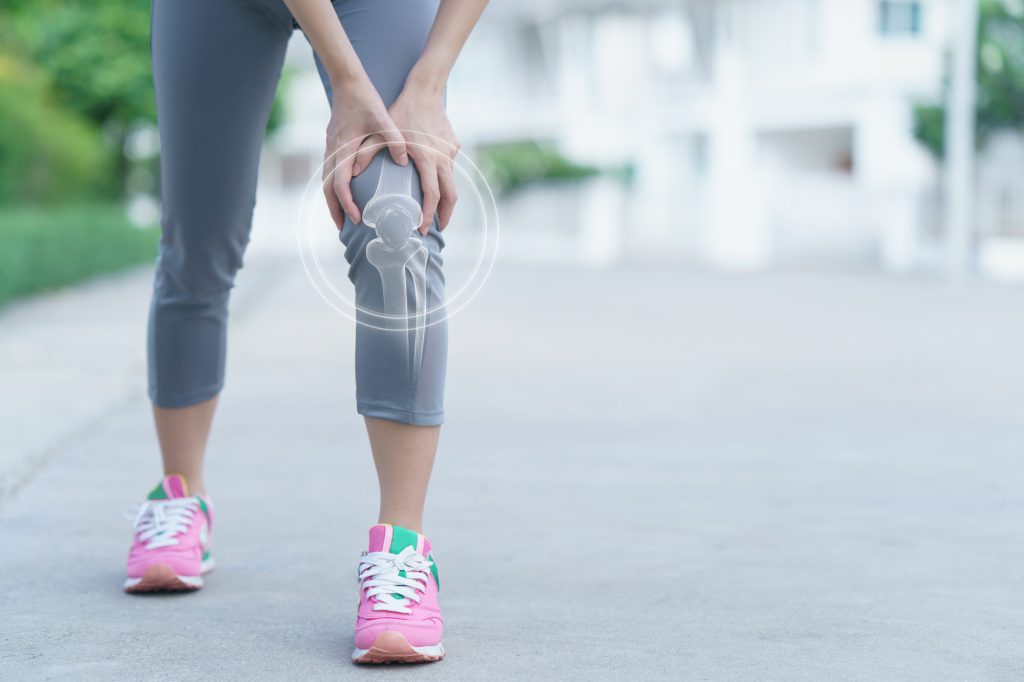
Many people enjoy playing sports and participating in physical activity, whether playing for fun in the backyard or competitively on a sports tea. Sports participation is beneficial to your health, but there is always the risk of injury. The knee is very vulnerable to injury in sports and everyday life. Knee injuries can occur due to poor training practices, flawed techniques, improper equipment, or accidents.
The knee is a complex joint that serves as an integral component of healthy mobility, and when one experiences an injury, he or she often requires surgery and physical therapy. Our orthopedic specialists are skilled at diagnosing and treating these common knee injuries. We assess your knee, conduct testing and imaging to confirm the problem, and develop a comprehensive treatment plan.
Sprains and Strains
The most common types of knee injuries are sprains and strains. A sprain occurs when a ligament tears or stretches beyond normal points. A ligament is a band of connective tissue that attaches bone to bone, and sprains range from minor ligament tearing to severe severing. A strain is where a muscle or tendon stretch beyond normal, and this can also be minor or severe.
Shin Splint
A shin splint is pain along the tibia (shin bone). This pain is typically at the anterior (front) region of the lower leg, but it can also occur in the knee region. Shin splints often affect runners who run on hard surfaces. Contributing factors for shin splints are poor running shoes, lack of support, failing to warm up/stretch, and having flat feet.
Fractures
The knee bones include the femur, tibia, and patella. Small cracks in any of these bones can occur from repeated stress. A stress fracture occurs from repeated impact, such as jumping or running. A patella fracture can occur from a fall onto the kneecap region. A tibia plateau fracture occurs when sudden excessive pressure collapses the top region of the tibia bone.
Dislocations
A dislocation occurs when one bone of a joint comes out of alignment. Also known as luxation, excessive stretching, falling, and twisting injuries can lead to a dislocation. Dislocated bones may be able to be realigned by a doctor, but some of these injuries require surgery. The condition involves bones of the knee being dislodged partially or completely.
Anterior Cruciate Ligament Injury
The anterior cruciate ligament (ACL) is an important knee structure. Injuries of the ACL are not just problems for athletes. A partial or complete ACL tear can occur from a quick change of direction, or from a compressive pressure of landing improperly when jumping. Damage to the ACL can cause an unstable knee.
Posterior Cruciate Ligament Injury
Posterior cruciate ligament (PCL) injury occurs when the knee is in the bent position. This type of injury results usually in only a partial tear and injury of the PCL can occur from falls or car accidents. The PCL does not have good blood flow, so tears of this type have difficulty healing.
Meniscus Tears
The meniscus is a wedge-shaped cartilage that serves as a cushion between the femur and tibia bones of the knee joint. Twisting or squatting can result in a meniscus tear, which also occurs from normal degeneration as people age.
Patellofemoral Syndrome
When the underside of the patella becomes irritated and inflamed, patellofemoral syndrome occurs. This is related to the kneecap rubbing against the femoral condyle with extension and flexion (bending) of the knee. The inflammation can result in serious pain.